

Is your office chair suddenly sinking every time you sit down? It’s frustrating when your chair won’t stay at the right height, making it hard to focus and stay comfortable.
You’re not alone, and the good news is that fixing this problem is easier than you think. You’ll discover simple, step-by-step solutions to stop your chair from going down. Keep reading, and you’ll be back to sitting comfortably and working without interruptions in no time.

Credit: m.youtube.com
Common Causes Of Office Chair Sinking
Office chairs that keep sinking can be very annoying. This problem happens when the chair does not stay at the height you set.
Several parts of the chair can cause it to sink. Knowing these parts helps you fix the chair or decide if you need a new one.
Faulty Gas Cylinder
The gas cylinder is the part that controls the chair’s height. It uses gas pressure to hold the seat up.
If the gas cylinder is damaged or worn out, the chair will slowly sink down even when you do not want it to.
- Gas leaks inside the cylinder reduce pressure.
- Old cylinders lose their ability to hold weight.
- Damaged seals let the gas escape.
Worn Out Seat Mechanism
The seat mechanism connects the seat to the base. It allows you to tilt and adjust the chair.
If this mechanism wears out, it may not lock properly. The seat might move or sink without control.
- Loose bolts make the seat unstable.
- Broken parts fail to hold the seat position.
- Rust or dirt can cause the mechanism to jam.
Loose Or Broken Lever
The lever lets you raise or lower the chair. It controls the gas cylinder’s release valve.
If the lever is loose or broken, it may not close the valve fully. This causes the chair to sink over time.
- Broken levers cannot hold the valve shut.
- Loose levers may move and open the valve accidentally.
- Worn springs inside the lever reduce control.
Damaged Base Or Casters
The base and casters support the chair’s weight and allow movement. Damage here can affect stability.
If the base cracks or casters break, the chair may tilt or sink unevenly. This can feel like the chair is going down.
- Cracks in the base weaken support.
- Broken casters cause uneven pressure points.
- Loose screws on the base reduce stability.
Tools Needed For Repair
Fixing an office chair that keeps going down requires a few tools. These tools help you check and replace broken parts.
Having the right tools makes the repair faster and easier. Let’s look at what you need.
Basic Hand Tools
Basic hand tools help you open the chair parts and remove screws or bolts. These tools are common in most toolkits.
They let you access the gas lift and other parts that may need fixing.
- Screwdrivers (flathead and Phillips)
- Adjustable wrench
- Allen wrenches (hex keys)
- Pliers
- Rubber mallet (optional)
Replacement Parts
Sometimes the chair parts are worn out and need replacement. Having spare parts ready helps you fix the chair quickly.
Common parts to replace include the gas lift, cylinder, and seals that keep the chair height steady.
- Gas lift cylinder
- Seals or O-rings for the cylinder
- Base or wheels (if damaged)
- New screws or bolts (if old ones are stripped)
Lubricants And Cleaners
Lubricants help parts move smoothly and stop sticking. Cleaners remove dirt and old grease that block parts.
Use the right lubricant and cleaner to keep the chair working well after repair.
- Silicone spray lubricant
- WD-40 or similar penetrating oil
- Rubbing alcohol or mild cleaner
- Cloth or paper towels
Fixing The Gas Cylinder
Office chairs use a gas cylinder to adjust height smoothly. Sometimes the chair sinks down on its own. This happens when the gas cylinder is worn out or damaged. Fixing or replacing the gas cylinder can stop this problem.
This guide shows how to test the cylinder, try temporary fixes, and replace the gas lift if needed.
How To Test The Cylinder
Test the gas cylinder to check if it is the cause of the chair sinking. Sit on the chair and adjust the height. If it keeps going down without weight, the cylinder may be faulty.
Another test is to lift the chair without sitting on it. If the chair lowers by itself, the gas cylinder is likely broken.
- Sit on the chair and raise it to the highest point.
- Wait for a few minutes without moving.
- If the chair sinks down, the cylinder leaks gas.
- Lift the chair without weight and see if it lowers.
Temporary Fixes
Temporary fixes can stop the chair from sinking for a short time. These fixes do not solve the problem but help until you replace the gas cylinder.
One way is to tighten the cylinder with a pipe clamp. Another is to use a piece of wood or a strong object to hold the chair at the right height.
- Use a pipe clamp to tighten the gas cylinder base.
- Place a block of wood under the seat for support.
- Do not put too much weight on the chair.
- Replace the gas cylinder soon for safety.
Replacing The Gas Lift
Replacing the gas lift is the best way to fix the chair. You need to buy a new gas cylinder that fits your chair model.
Remove the old gas lift by pulling the chair base away from the seat. Use a rubber mallet if it is stuck. Insert the new gas lift and press the base back onto the seat.
- Turn the chair upside down on a soft surface.
- Pull the base off the gas cylinder.
- Use a rubber mallet to loosen the old cylinder if needed.
- Remove the old gas cylinder from the base.
- Insert the new gas cylinder into the base.
- Attach the base back to the seat tightly.
- Test the chair height to ensure it works well.

Credit: loftyfurniture.com
Repairing The Seat Mechanism
Office chairs can lose height or tilt control over time. Fixing the seat mechanism helps the chair stay firm. This guide shows simple ways to repair it.
Focus on tightening parts, adjusting controls, and replacing broken pieces. These fixes can stop the chair from sinking down.
Tightening Loose Components
Loose screws or bolts can cause the chair to drop. Check all fasteners under the seat and on the base. Use a wrench or screwdriver to tighten them firmly.
Look for wobbling parts and secure them. Tightening these parts often stops unwanted movement and improves stability.
- Turn the chair upside down for easy access
- Tighten bolts connecting the seat to the base
- Check screws on the tilt and height controls
- Do not overtighten to avoid stripping threads
Adjusting The Tilt And Height Controls
Sometimes the tilt or height controls are not set correctly. Adjusting them can stop the chair from sinking. Locate the control levers or knobs under the seat.
Try moving the levers while sitting to test the chair’s response. Set the height and tilt to your comfort and lock them in place if possible.
- Lift the height lever fully to raise the chair
- Push the lever down to lower the chair
- Turn or push the tilt knob to adjust tilt tension
- Lock the tilt if the chair has a locking feature
Replacing Broken Parts
If tightening and adjusting do not help, some parts may be broken. Common parts to replace include gas cylinders, levers, and tilt mechanisms.
Order replacement parts that fit your chair model. Follow instructions to remove the broken parts safely and install new ones.
- Use a pipe wrench to remove the old gas cylinder
- Unscrew broken levers or knobs carefully
- Install new parts by reversing removal steps
- Test the chair before full use
Securing The Lever And Controls
An office chair that keeps going down often has a problem with its lever or controls. These parts control the chair's height and locking functions. Fixing them can stop the chair from dropping unexpectedly.
Check the lever and controls carefully. Make sure they are tight and work properly. This guide will help you inspect, fix, or replace the lever and ensure all connections are secure.
Inspecting The Lever
Look under the chair to find the lever that controls the height. Check if it moves smoothly or feels loose. A loose lever can cause the chair to sink.
Also, see if the lever is bent, broken, or disconnected from the mechanism. Any damage can stop it from working right.
- Check for loose screws or bolts around the lever
- Test the lever movement up and down
- Look for cracks or bends in the lever
- Make sure the lever connects to the gas lift cylinder
Fixing Or Replacing The Lever
Tighten any loose screws or bolts on the lever. Use a screwdriver or wrench that fits. This may solve the problem if the lever feels loose.
If the lever is broken or bent, replace it. You can buy a new lever online or at a furniture store. Remove the old lever by unscrewing it and attach the new one the same way.
- Tighten loose parts to restore lever control
- Replace damaged levers for safe use
- Follow the chair manual for lever replacement
- Test the new lever to confirm it works properly
Ensuring Proper Connection
Check the connection between the lever and the gas lift cylinder. This part moves the chair up and down. The lever must be securely attached to control the cylinder.
Make sure the gas lift cylinder is not loose inside the chair base. A loose connection can cause the chair to drop. Tighten any loose fittings and test the chair height control.
- Verify lever connects firmly to gas lift cylinder
- Inspect gas lift cylinder for damage or wear
- Secure all bolts and fittings around the cylinder
- Test chair height adjustment after securing parts
Maintaining Your Office Chair
Office chairs need care to work well for a long time. Regular maintenance helps prevent problems.
Fixing a chair that keeps going down is easier with good upkeep. Keep your chair clean, lubricated, and checked often.
Regular Cleaning
Clean your chair to remove dust and dirt. Dirt can cause parts to stick or wear out faster.
Use a soft cloth and mild cleaner for the seat and armrests. Avoid harsh chemicals that can damage materials.
- Wipe the seat and backrest weekly
- Clean wheels and base to remove debris
- Dry parts well after cleaning
Lubricating Moving Parts
Lubricate the chair’s moving parts to keep them smooth. This helps the gas lift work properly.
Use a silicone spray or light oil. Apply it to the gas lift, wheels, and any metal joints.
- Spray lubricant on the gas lift cylinder
- Lubricate wheel axles and swivel joints
- Wipe off extra oil to prevent dirt buildup
Periodic Inspections
Check your chair regularly for damage or loose parts. Early fixes stop bigger problems.
Look for cracks, worn parts, and loose screws. Tighten or replace parts as needed.
- Inspect the gas lift for leaks or damage
- Check screws and bolts for tightness
- Test the height adjustment function
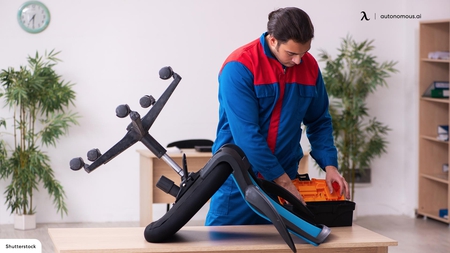
Credit: www.autonomous.ai
Frequently Asked Questions
Why Does My Office Chair Keep Sinking?
Your office chair might sink due to a faulty gas cylinder. Over time, these cylinders can wear out, causing the chair to lose its height. Replacing the cylinder or using a temporary fix like a hose clamp can help resolve this issue.
How Can I Fix A Sinking Office Chair?
To fix a sinking chair, replace the gas cylinder. Alternatively, use a hose clamp to stabilize the chair temporarily. Always ensure your tools are suitable for the task to avoid further damage.
What Tools Do I Need To Fix My Chair?
You'll need a wrench, screwdriver, and a replacement gas cylinder or hose clamp. These tools will help you disassemble and reassemble the chair effectively.
Can I Prevent My Chair From Sinking?
Regular maintenance can help prevent your chair from sinking. Check the gas cylinder periodically and tighten any loose screws. Investing in a high-quality chair with a durable cylinder can also minimize this issue.
Conclusion
Fixing an office chair that keeps going down is simple. Check the gas lift and tighten any loose parts. Replace damaged components to keep your chair stable. Small repairs can save money and extend chair life. A steady chair helps you work comfortably every day.
Take action early to avoid bigger problems later. Your chair should support you, not cause frustration. Keep it fixed, and enjoy better sitting now.


