

Have you ever noticed a scratch or peel on your favorite wooden furniture and felt frustrated? Repairing furniture veneer might seem tricky, but with the right steps, you can fix those imperfections yourself.
Imagine bringing back that smooth, polished look without spending a fortune or calling a professional. In this guide, you’ll discover simple, effective ways to restore your furniture’s beauty and protect your investment. Ready to turn those damaged surfaces into something you’re proud of again?
Let’s get started.
Tools And Materials Needed
Repairing furniture veneer needs the right tools and materials. These help fix the surface cleanly and last long.
Using proper items makes the repair easier and the result better. Let’s look at what you need.
Essential Repair Tools
You need a few basic tools to start fixing veneer. These tools help remove damaged parts and apply new veneer smoothly.
- Utility knife or veneer saw to cut damaged veneer
- Putty knife for spreading glue and filler
- Sanding block with fine-grit sandpaper
- Clamps to hold veneer in place while drying
- Small brush for applying glue
- Clean cloth for wiping excess glue
Choosing The Right Veneer
Select veneer that matches your furniture in color and grain. This keeps the repair looking natural and blends well.
You can buy veneer sheets or pre-cut patches. Thin sheets are easier to work with and fit better on curves.
- Match the wood type (oak, walnut, cherry, etc.)
- Pick the closest color and grain pattern
- Choose veneer thickness around 0.5mm to 1mm
- Use flexible veneer for curved surfaces
Adhesives And Fillers
Strong glue is key to fixing veneer firmly. Use adhesives made for wood or veneer work to avoid peeling later.
Fillers help cover small cracks or gaps. Choose fillers that can be sanded and stained to match your veneer.
- Wood glue or contact cement for bonding veneer
- Wood filler for small holes or chips
- Wax sticks for minor scratches
- Clear epoxy for stronger repairs

Credit: www.amazon.com
Assessing The Damage
Before fixing furniture veneer, check the damage carefully. This helps you decide the best way to repair it.
Knowing the type and size of the damage saves time and effort during repair.
Identifying Types Of Veneer Damage
Veneer damage can look different. Common types include cracks, chips, peeling, and water stains.
Each damage type needs a different repair approach. Spotting the type is the first step.
- Cracks:Thin splits on the surface of the veneer.
- Chips:Small pieces missing from the veneer edges.
- Peeling:Veneer lifting or separating from the base.
- Water stains:Discolored spots caused by moisture.
Determining Repair Feasibility
Check if the damage is small enough to fix or too large. Some damage may need replacing the veneer.
Consider the veneer thickness and how much wood shows under the damage. Thin veneer is harder to repair.
- Small cracks and chips can often be filled and sanded.
- Peeling veneer can be glued back if the wood underneath is sound.
- Deep damage or missing large pieces may require veneer replacement.
- Severe water damage might need sanding and refinishing or replacing.
Preparing The Surface
Repairing furniture veneer starts with preparing the surface. A clean, smooth base helps the new veneer stick well.
Take your time to get the surface ready before adding any new materials.
Cleaning And Sanding
First, clean the surface to remove dirt and grease. Use a mild cleaner and a soft cloth. Avoid soaking the wood.
Next, sand the area gently. Use fine-grit sandpaper to smooth bumps and rough spots. This helps the new veneer stick better.
- Wipe off dust with a dry cloth after sanding
- Sand in the direction of the wood grain
- Do not over-sand to avoid damage
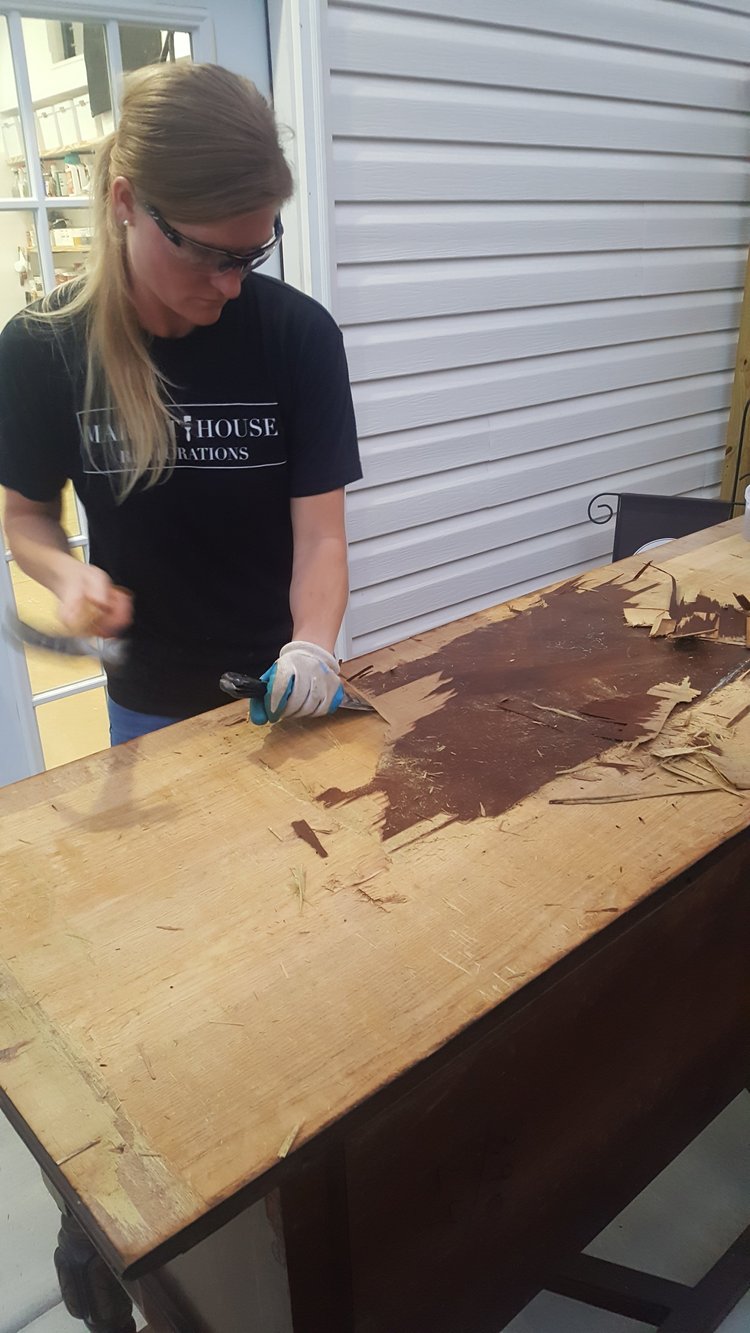
Removing Old Veneer
Remove any loose or damaged veneer carefully. Use a putty knife or a scraper to lift it off.
If the old veneer is stuck, soften the glue with heat. A hairdryer or heat gun works well. Be careful not to burn the wood.
- Work slowly to avoid damaging the wood underneath
- Remove all loose pieces before repairing
- Clean leftover glue with a scraper or sandpaper
Credit: www.markethouserestorations.com
Fixing Small Chips And Scratches
Small chips and scratches can make furniture look old and worn. Fixing them helps your furniture look fresh again. You can repair veneer damage with simple tools and materials.
Focus on filling the damaged areas and matching the color. This makes the repair less visible and keeps the furniture looking nice.
Using Wood Fillers
Wood fillers fill in small chips and scratches on veneer surfaces. They come in different colors to match your wood. Choose a filler close to your furniture’s color for the best look.
Apply the filler with a small tool or your finger. Press it into the damaged area and smooth it out. Let the filler dry completely before you do anything else.
- Pick filler color to match your veneer
- Use a small spatula or plastic card for applying
- Fill the chip or scratch carefully without spilling over
- Let the filler dry as per instructions
- Lightly sand the area if needed for smoothness
Blending With Stains And Paints
After filling, blend the area with stains or paints. This step hides the repair and matches the furniture’s color. Use a small brush to apply stain or paint gently.
Test your stain or paint on a hidden spot first. This helps you find the right color and avoid mistakes. Apply thin layers and let each dry before adding more.
- Choose stain or paint close to veneer color
- Use a fine brush for precise application
- Apply thin coats to avoid buildup
- Let each layer dry before adding another
- Blend edges carefully for a natural look
Replacing Large Veneer Sections
Replacing large sections of furniture veneer can restore the look of old or damaged pieces. This process takes patience and careful work.
You need to cut the new veneer to size, apply adhesive, and clamp it properly for a smooth finish.
Cutting And Fitting New Veneer
Start by removing the damaged veneer carefully. Use a sharp blade to cut around the area.
Cut the new veneer slightly larger than the space. Then trim it to fit perfectly after testing.
- Measure the damaged area precisely
- Cut veneer with a sharp knife or veneer saw
- Test fit before gluing
- Trim edges for a clean fit
Applying Adhesive Properly
Use wood glue or contact cement made for veneer. Apply glue evenly on both surfaces for strong hold.
Avoid using too much glue. Excess glue can cause bumps or bubbles under the veneer.
- Apply a thin, even layer of adhesive
- Glue both the furniture surface and veneer
- Follow glue drying time instructions
- Press firmly to avoid air pockets
Clamping And Drying Tips
Clamp the veneer in place to hold it tightly while drying. Use a flat board or caul to spread pressure evenly.
Leave clamps on for the full drying time. Do not remove clamps early or the veneer may lift or bubble.
- Use clamps with padded jaws to avoid marks
- Place a flat board over veneer before clamping
- Check for glue squeeze-out and wipe it away
- Let dry at room temperature for best results
Finishing Touches
After fixing the veneer on your furniture, the final steps make it look smooth and new. Finishing touches help protect the repair and blend it with the rest of the piece.
These steps include sanding the repair and applying stain and sealant. Both are key for a neat and lasting finish.
Sanding And Smoothing Repairs
Use fine-grit sandpaper to smooth the repaired veneer area. Sand gently to avoid damaging the thin wood layer.
Keep sanding until the surface feels even with the surrounding veneer. This step removes rough spots and old glue.
- Start with 220-grit sandpaper for rough spots
- Finish with 320-grit sandpaper for a smooth surface
- Wipe dust off with a clean cloth before staining
Applying Stain And Sealant
Choose a wood stain that matches your furniture’s color. Apply it evenly with a soft cloth or brush.
Let the stain dry completely before adding a sealant. Sealants protect the veneer from moisture and wear.
- Test stain on a small area first
- Apply thin coats for better control
- Use polyurethane or varnish as a sealant
- Allow sealant to dry fully between coats
Preventing Future Damage
Repairing furniture veneer can make your pieces look new again. Keeping them safe helps them last longer.
Taking care of veneer prevents cracks, chips, and peeling. Small actions protect your furniture's surface.
Maintenance Tips
Clean veneer with a soft cloth to avoid scratches. Use mild soap and water for stains.
Apply furniture polish or wax to protect the surface. Do this every few months for best results.
- Dust regularly with a microfiber cloth
- Avoid harsh chemicals and abrasive cleaners
- Use coasters and pads under hot or heavy items
- Fix small chips immediately to stop spreading damage
Environmental Considerations
Keep furniture away from direct sunlight. UV rays can fade and dry out the veneer.
Control indoor humidity to stop veneer from warping or peeling. Use a humidifier or dehumidifier as needed.
- Place furniture away from heaters and air conditioners
- Maintain room temperature between 60°F and 80°F (15°C - 27°C)
- Use curtains or blinds to protect from sunlight
- Keep plants and water sources at a safe distance

Credit: www.youtube.com
Frequently Asked Questions
How Do I Fix Peeling Veneer On Furniture?
To fix peeling veneer, gently lift the loose part. Apply wood glue underneath, then press and clamp it until dry. Remove excess glue with a damp cloth. This method prevents further damage and restores the surface smoothly.
What Tools Are Needed To Repair Veneer Furniture?
You need wood glue, a putty knife, clamps, sandpaper, and a utility knife. These tools help in lifting, gluing, smoothing, and trimming the veneer for a clean repair.
Can I Repair Chipped Veneer At Home?
Yes, chipped veneer can be repaired with wood filler or a veneer patch. Sand the area, apply filler or glue the patch, and finish by sanding and staining to match the original surface.
How Long Does Veneer Repair Take To Dry?
Wood glue used for veneer repairs typically dries in 30 minutes to 1 hour. Full curing may take up to 24 hours for maximum strength before sanding or finishing.
Conclusion
Repairing furniture veneer takes patience and simple steps. Small cracks and chips do not need big tools. Use glue and clamps to fix loose parts. Sand lightly to smooth rough edges. Match the color with stain or paint carefully. Keep your workspace clean and work slowly.
You can save old furniture with these easy tips. Practice makes your repairs better over time. Try these steps to bring your veneer back to life. Your furniture will look fresh and last longer.


