

Are you ready to give your walls a fresh, clean look with PVC wall panels? Cutting these panels might seem tricky at first, but with the right tips and tools, you can do it yourself easily.
Imagine saving money and gaining the satisfaction of a perfect fit every time. In this guide, you’ll learn simple, step-by-step methods to cut PVC wall panels like a pro. Keep reading to discover how to make your project smoother and more enjoyable from start to finish.
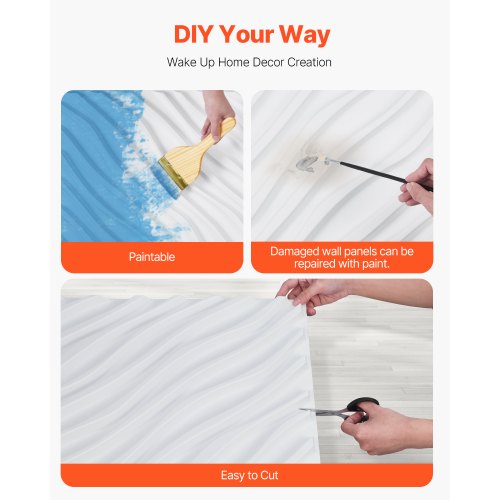
Credit: www.vevor.ca
Tools Needed For Cutting Pvc Panels
Cutting PVC wall panels needs the right tools to get clean edges. Using the correct tools helps you work faster and safer.
You can use hand tools or power tools for cutting PVC panels. Each type has its benefits and suits different tasks.
Hand Tools Vs Power Tools
Hand tools give you good control for small or detailed cuts. They are simple and need no electricity.
Power tools cut PVC panels faster and with less effort. They work well for long or straight cuts but need careful handling.
- Hand Tools:Utility knife, handsaw, and scoring tool
- Power Tools:Jigsaw, circular saw, and rotary tool
- Hand tools are best for thin panels and small jobs
- Power tools handle thicker panels and larger projects
Safety Gear Essentials
Always wear safety gear when cutting PVC panels. It protects you from dust, sharp edges, and noise.
Safety gear makes your work safer and more comfortable. Never skip these important items.
- Safety glasses to protect your eyes
- Dust mask to avoid breathing plastic particles
- Gloves to protect your hands from cuts
- Ear protection if using loud power tools
- Long sleeves to protect skin from sharp edges
Preparing Pvc Panels For Cutting
Cutting PVC wall panels needs careful preparation. Proper steps help get clean and accurate cuts.
Good preparation saves time and reduces mistakes during cutting. Follow these tips for best results.
Measuring And Marking Techniques
Measure the PVC panel carefully before cutting. Use a tape measure for accuracy.
Mark the cut line with a pencil or a fine marker. Make sure the line is straight and clear.
- Measure twice to avoid mistakes
- Use a straight edge or ruler for marking
- Mark on the smooth side of the panel
Securing Panels For Stability
Hold the panel steady before cutting. This stops the panel from moving and causing uneven cuts.
Use clamps or place the panel on a flat surface. Make sure it is fully supported along the cut line.
- Use clamps to fix the panel to a workbench
- Place scrap wood under the panel for support
- Check stability before starting the cut
Cutting Methods For Pvc Panels
Cutting PVC wall panels requires the right tools and techniques. This helps you get clean, straight edges.
There are several ways to cut PVC panels. Choose the method that fits your tools and skill level.
Using A Utility Knife
A utility knife works well for thin PVC panels. Score the panel deeply before snapping it to break cleanly.
Make several passes with the knife to cut through the surface. Use a straight edge to guide the cut line.
- Mark the cut line clearly on the panel
- Use a metal ruler for straight cuts
- Score the panel multiple times with firm pressure
- Snap the panel along the scored line
- Sand edges if needed for smoothness
Employing A Handsaw
A handsaw is good for thicker PVC panels. Use a fine-toothed saw for smooth cuts and less chipping.
Cut slowly to avoid cracking. Hold the panel firmly or clamp it to a stable surface before cutting.
- Choose a fine-tooth handsaw or a hacksaw
- Secure the panel with clamps or a workbench
- Cut along the marked line with steady strokes
- Keep the saw straight to avoid angled edges
- File or sand rough edges after cutting
Power Saw Techniques
Power saws like circular saws or jigsaws cut PVC panels quickly. Use the right blade for plastic materials.
Wear safety gear and work in a well-ventilated area. Support the panel firmly to prevent vibrations during cutting.
- Use a fine-toothed blade designed for plastics
- Set the saw to a moderate speed to reduce melting
- Wear safety glasses and a dust mask
- Clamp the panel to keep it stable
- Make slow, steady cuts following your line
- Clean edges with a file or sandpaper
Tips For Clean And Accurate Cuts
Cutting PVC wall panels needs care to get smooth and exact edges. Clean cuts improve the panel's look and fit.
Use the right tools and follow simple tips to avoid damage. This guide helps you cut panels neatly and accurately.
Avoiding Chipping And Cracking
Chips and cracks happen if the panel is cut too fast or with wrong tools. Slow, steady cuts reduce this risk.
Support the panel well during cutting. Use sharp blades made for plastics or a fine-tooth saw blade.
- Use a utility knife for thin panels
- Score the panel several times before snapping
- Clamp the panel firmly to prevent movement
- Cut slowly to avoid heat build-up
- Wear safety goggles to protect your eyes
Maintaining Straight Edges
Straight edges give a professional finish. Mark your cut line clearly with a pencil or tape.
Use a straight edge or ruler as a guide. This keeps your saw or knife on track for a clean line.
- Draw the cut line before starting
- Use a metal ruler or straight edge
- Keep the cutting tool steady and straight
- Check the panel alignment before cutting
- Sand the cut edge lightly to smooth it
Handling Curves And Complex Shapes
Cutting PVC wall panels can be tricky, especially with curves and complex shapes. You need the right tools and techniques to get clean cuts without breaking the panels.
This guide covers two easy ways to cut curves in PVC panels: scoring and snapping, and using jigsaws. Both methods work well for different types of shapes.
Scoring And Snapping Method
Scoring and snapping works best for gentle curves and straight lines. You score the panel surface deeply with a utility knife along the cut line. Then you bend the panel until it snaps cleanly.
This method is simple and does not need power tools. It works well for thin panels and basic shapes.
- Draw the curve on the panel clearly
- Use a sharp utility knife to score the line
- Score multiple passes for a deep groove
- Bend the panel along the score line slowly
- The panel should snap cleanly along the score
- Use sandpaper to smooth rough edges
Using Jigsaws For Curves
Jigsaws cut curves easily on thicker or tougher PVC panels. They allow more precise and smooth cuts on complex shapes.
Use a fine-tooth blade designed for plastics. Cut slowly and follow your drawn curve to avoid splintering the edges.
- Mark your curve clearly on the panel
- Secure the panel on a stable surface
- Use a jigsaw with a fine-tooth blade
- Start cutting slowly along the line
- Keep the blade straight and steady
- Sand edges after cutting to smooth them

Credit: www.thepanelhub.com
Post-cut Finishing Touches
After cutting PVC wall panels, finishing touches improve the look and fit. This helps the panels blend well on walls.
Proper finishing also protects the edges and prepares the panels for installation.
Sanding Edges Smooth
Sanding the cut edges removes roughness and sharp spots. Smooth edges prevent damage and give a neat finish.
Use fine-grit sandpaper and gently sand along the edges. Move in one direction for the best results.
- Choose 120-220 grit sandpaper for smooth sanding
- Wear a mask to avoid inhaling dust
- Sand slowly to avoid removing too much material
- Check edges by touch to ensure smoothness
Cleaning And Preparing For Installation
Cleaning the panels removes dust and debris from sanding. Clean panels stick better and look cleaner on walls.
Use a damp cloth or mild cleaner to wipe the panels. Let them dry completely before installation.
- Wipe edges and surfaces with a soft cloth
- Use water or a gentle soap solution
- Avoid harsh chemicals that can damage PVC
- Dry panels fully to prevent moisture issues
Common Mistakes To Avoid
Cutting PVC wall panels can be tricky if you are not careful. Many people make simple mistakes that cause poor cuts or damage.
Knowing what to avoid helps you get clean, straight cuts every time. Let’s look at common errors and how to prevent them.
Incorrect Tool Usage
Using the wrong tools can ruin your PVC panels. Some tools may crack or chip the material instead of cutting it smoothly.
Always use a fine-toothed saw or a utility knife designed for plastic. Avoid heavy-duty saws that cause rough edges.
- Do not use blades meant for wood or metal only
- Keep blades sharp to avoid tearing the panel
- Use a straight edge to guide your cuts
- Wear safety gear like gloves and goggles
Poor Measurement Practices
Bad measurements lead to wasted panels and poor fit. Measuring twice before cutting is very important.
Use a reliable tape measure and mark your panels clearly. Avoid guessing or rushing the measuring process.
- Measure the wall area carefully before cutting
- Mark the panel with a pencil or fine marker
- Double-check your measurements before cutting
- Account for panel overlap if required

Credit: easypanels.co.uk
Frequently Asked Questions
How Do You Measure Pvc Wall Panels Before Cutting?
Measure the wall accurately using a tape measure. Mark the panel with a pencil where cuts are needed. Double-check measurements to avoid mistakes before cutting.
What Tools Are Best For Cutting Pvc Wall Panels?
A fine-toothed handsaw, jigsaw, or circular saw works best. Use sharp blades to ensure clean, smooth cuts without damaging the panels.
How Do You Cut Pvc Panels Without Cracking?
Cut slowly and steadily to prevent cracking. Support the panel firmly and use appropriate tools with sharp blades to reduce stress on the material.
Can I Use A Utility Knife To Cut Pvc Panels?
A utility knife can score thin PVC panels. However, thicker panels require saws for clean and accurate cuts to avoid uneven edges.
Conclusion
Cutting PVC wall panels can be simple with the right tools. Measure carefully to avoid mistakes. Use a sharp blade or saw for clean edges. Take your time and work safely. Practice on a scrap piece before cutting the main panel.
Clean up any rough spots with sandpaper. This helps your panels fit perfectly and look neat. Following these tips makes your project easier and more successful. Enjoy your updated walls with confidence.


