Choosing the right memory foam mattress thickness can make a huge difference in how well you sleep and how comfortable you feel every night. You might wonder, “Is thicker always better?” or “What thickness suits my body and sleeping style?” Getting this right isn’t just about comfort—it impacts your health, support, and even how long your mattress lasts.
Keep reading to discover exactly how thick your memory foam mattress should be to give you the best sleep experience possible. Your perfect night’s rest is closer than you think.
Credit: www.sleep-smartmattress.com
Ideal Thickness For Comfort
Choosing the right thickness for a memory foam mattress is important. Thickness affects comfort and support during sleep.
Too thin or too thick layers can make your mattress less comfortable. Finding the right balance helps improve sleep quality.
Standard Thickness Ranges
Memory foam mattresses usually come in thicknesses between 6 and 14 inches. This range suits most sleepers.
The most common thickness options are 8, 10, and 12 inches. These give good comfort and support for many people.
- 6-8 inches: Best for kids or guest beds
- 8-10 inches: Good for most adults
- 10-14 inches: Offers extra cushioning and support
Factors Influencing Thickness Choice
Your body weight affects mattress thickness needs. Heavier people usually need thicker mattresses for support.
Sleep position also matters. Side sleepers may prefer thicker mattresses to cushion shoulders and hips.
- Lightweight sleepers can choose thinner mattresses
- Back sleepers benefit from medium thickness
- Heavier or side sleepers should pick thicker options
- Room height and bed frame type can limit mattress thickness

Credit: plankandbeam.com
Thickness And Support Levels
Memory foam mattresses come in different thicknesses. The thickness affects how much support and comfort you get while sleeping.
Choosing the right thickness helps you sleep better. It depends on your body weight and how firm or soft you want your mattress.
Thin Mattresses For Firm Support
Thin memory foam mattresses are usually 6 to 8 inches thick. They offer firm support and keep your body stable.
These mattresses work well for people who sleep on their stomach or back. They prevent your body from sinking too much.
- Thickness range: 6 to 8 inches
- Good for firm support
- Best for stomach and back sleepers
- Prevents deep sinking
Thicker Mattresses For Pressure Relief
Thicker memory foam mattresses are usually 10 to 14 inches thick. They provide more cushioning and relieve pressure points.
These mattresses suit side sleepers and people with joint pain. They help reduce aches by softening contact areas.
- Thickness range: 10 to 14 inches
- Offers better pressure relief
- Ideal for side sleepers
- Reduces joint and muscle pain
Impact On Sleep Quality
The thickness of a memory foam mattress affects how well you sleep. It helps support your body and keeps you comfortable all night.
A mattress that is too thin may not give enough support. A mattress that is too thick might feel too soft or warm. Finding the right thickness is important for good rest.
Spine Alignment Benefits
A memory foam mattress with the right thickness keeps your spine straight. This helps reduce back pain and stiffness.
Thicker mattresses provide better support for your neck, shoulders, and lower back. This helps your body stay in a natural position while you sleep.
- Prevents spine from bending unnaturally
- Reduces pressure on joints
- Supports body curves evenly
Motion Isolation And Thickness
Memory foam mattresses absorb movement well. Thicker mattresses often isolate motion better than thinner ones.
This means if your partner moves or gets up, you feel less disturbance. Good motion isolation helps you stay asleep longer.
- Thicker foam layers reduce motion transfer
- Less shaking when partner moves
- Improves overall sleep quality
Thickness For Different Sleep Positions
Choosing the right thickness for a memory foam mattress depends on your sleeping position. The thickness affects comfort and support for your body.
Different sleep positions need different mattress thicknesses to keep your spine aligned and reduce pressure points.
Back Sleepers
Back sleepers need a mattress that supports the natural curve of the spine. A medium thickness mattress works best for them.
A mattress between 8 and 12 inches thick provides enough support without sinking too much. This helps keep the lower back supported.
Side Sleepers
Side sleepers need more cushioning to relieve pressure on shoulders and hips. Thicker mattresses offer better comfort in these areas.
A mattress 10 to 14 inches thick helps side sleepers by contouring to the body and reducing pressure points.
- Thicker memory foam layers provide better pressure relief
- Soft to medium firmness enhances comfort
- Extra thickness helps keep spine aligned
Stomach Sleepers
Stomach sleepers need a firmer mattress to prevent their hips from sinking too deep. A thinner mattress often works well.
A mattress between 6 and 10 inches thick with firm support keeps the spine straight and reduces lower back pain.
Considerations For Weight And Body Type
Choosing the right thickness for a memory foam mattress depends on your weight and body type. The mattress should support your body well and feel comfortable.
Thicker mattresses often provide better support for heavier people. Lighter people may find thinner mattresses comfortable enough.
Lightweight Sleepers
Lightweight sleepers usually weigh less than 130 pounds. They do not need very thick mattresses to feel supported.
A 6 to 8-inch thick memory foam mattress often works well. It will provide enough cushioning without feeling too soft or too firm.
- Offers enough comfort and support
- Prevents sinking too deep into the mattress
- More affordable and easier to move
Heavier Sleepers
Heavier sleepers usually weigh more than 230 pounds. They need thicker mattresses for proper support and pressure relief.
A memory foam mattress 10 to 14 inches thick is better. This thickness helps to distribute weight evenly and avoid pressure points.
- Prevents mattress from sagging quickly
- Provides extra durability and support
- Improves spinal alignment during sleep
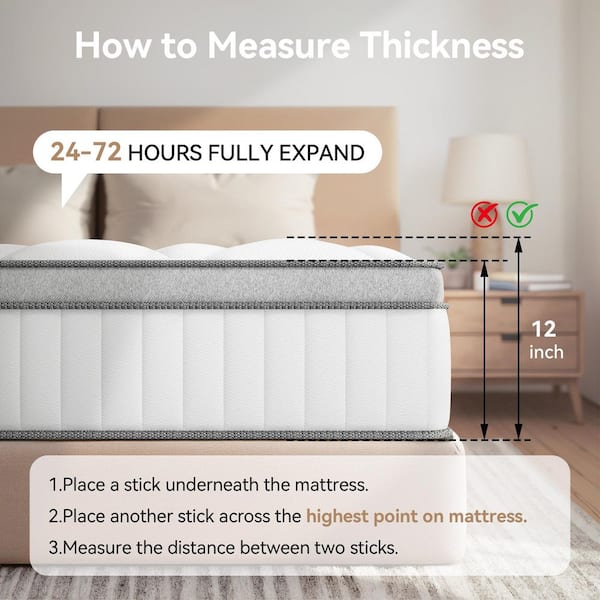
Credit: www.homedepot.com
Layer Composition And Thickness
Memory foam mattresses have different layers that affect comfort and support. The thickness of each layer matters for sleep quality.
Understanding the right thickness for each layer helps you pick a mattress that fits your needs.
Comfort Layer Thickness
The comfort layer is the top part that feels soft and cozy. It helps your body relax and reduces pressure points.
This layer usually ranges from 2 to 4 inches thick. Thicker comfort layers offer more cushioning, which suits side sleepers well.
- 2 inches: firmer feel, good for stomach sleepers
- 3 inches: balanced comfort and softness
- 4 inches: very soft, ideal for side sleepers
Support Core Thickness
The support core is the bottom layer that holds the mattress shape. It keeps your spine aligned and prevents sagging.
This layer is usually thicker than the comfort layer, often between 6 and 8 inches. A strong core improves mattress durability.
- 6 inches: suitable for lighter sleepers or thinner mattresses
- 7 inches: common thickness for good support
- 8 inches: best for heavier sleepers or thicker mattresses
Mattress Durability And Thickness
Choosing the right thickness for a memory foam mattress affects how long it lasts. Thickness can influence comfort and support over time.
Understanding mattress thickness helps you pick one that stays durable. Thicker mattresses often offer better performance.
Thicker Mattresses And Longevity
Thicker memory foam mattresses usually last longer than thinner ones. They have more material to absorb pressure and wear.
Mattresses thicker than 10 inches provide extra layers for support. These layers reduce the chance of sagging and body impressions.
- Thicker foam layers resist breakdown better
- Extra thickness helps keep mattress shape
- More support improves mattress lifespan
Signs Of Wear Based On Thickness
Thinner mattresses tend to show wear faster. Common signs include sagging and loss of support within a few years.
Thicker mattresses resist these signs longer but can still develop soft spots over time. Checking thickness helps spot early wear.
- Thinner mattresses sag more quickly
- Thicker mattresses keep shape longer
- Soft spots appear earlier in thin mattresses
- Regular inspection helps extend mattress life
Choosing Thickness Based On Bed Frame
The thickness of a memory foam mattress depends on the bed frame you use. Different frames support mattresses in different ways.
Picking the right thickness helps you get good support and comfort. It also keeps your mattress lasting longer.
Platform Beds
Platform beds have a flat, solid surface or slats to hold the mattress. They provide good support without needing a box spring.
Thicker memory foam mattresses work well on platform beds. A mattress about 10 to 12 inches thick gives good comfort and support.
- 8 inches may feel too thin on a platform bed
- 10-12 inches balances softness and support
- Thicker than 12 inches can be too soft without extra base
Adjustable Bases
Adjustable bases can change angles under your head and feet. The mattress must bend easily without damage.
Memory foam mattresses between 8 and 10 inches thick work best here. They are flexible but still supportive.
- Less than 8 inches may not feel supportive enough
- More than 10 inches can be hard to bend
- Choose softer memory foam for easier flexing
Box Springs
Box springs raise the mattress and add springy support. They often need a mattress that works well with their bounce.
Memory foam mattresses that are 10 to 14 inches thick fit best on box springs. This thickness keeps comfort and uses the box spring’s support.
- Too thin mattresses may feel hard on box springs
- Thicker than 14 inches can be too soft or sink too much
- Medium firmness memory foam pairs well with box springs
Budget Considerations And Thickness
Choosing the right thickness for a memory foam mattress affects your budget. Thicker mattresses usually cost more but offer better comfort.
It is important to find a good balance between price and the mattress thickness you need for restful sleep.
Cost Differences By Thickness
Memory foam mattresses come in different thicknesses, often ranging from 6 to 14 inches. The price tends to rise as thickness increases.
Thinner mattresses usually cost less but may not provide enough support. Thicker mattresses give more comfort and durability.
- 6 to 8 inches: Lower cost, lighter support
- 9 to 11 inches: Mid-range price, good comfort
- 12 to 14 inches: Higher price, maximum comfort and support
Balancing Price And Comfort
Finding the right thickness depends on your budget and comfort needs. A mattress too thin might feel hard.
Choosing a mid-thickness mattress often gives the best mix of comfort and price. It supports your body well without costing too much.
- Think about your sleeping position and body weight
- Try a mattress with at least 8 inches thickness for better support
- Remember that a thicker mattress lasts longer
Frequently Asked Questions
How Thick Should A Memory Foam Mattress Be?
The ideal thickness varies based on personal preference and support needs. Generally, a 10 to 14-inch mattress provides optimal comfort and support for most sleepers. Thicker mattresses offer enhanced pressure relief, while thinner ones can be firmer. Consider your sleeping position and body weight when choosing the right thickness.
Is A Thicker Mattress Always Better?
Not necessarily. Thicker mattresses offer more cushioning and support, but they may not suit everyone. Some people prefer a firmer feel, which thinner mattresses provide. It's important to consider your comfort needs, sleeping position, and body type. Test different thicknesses to find the one that suits you best.
What Is The Best Thickness For Side Sleepers?
Side sleepers typically benefit from a 12 to 14-inch mattress. This thickness provides ample cushioning for shoulders and hips, enhancing comfort. It helps in maintaining proper spinal alignment. A thicker mattress can prevent pressure points, ensuring restful sleep. Consider memory foam with good contouring properties for added comfort.
Does Mattress Thickness Affect Durability?
Yes, thickness can impact durability. Thicker mattresses generally have more layers, which may enhance longevity. However, quality of materials also plays a crucial role. High-density foam layers increase durability. A well-constructed thicker mattress can last longer, but always consider the manufacturer's warranty and material quality.
Conclusion
Choosing the right thickness for a memory foam mattress matters a lot. Thicker mattresses often provide better support and comfort. Thin mattresses can feel firm and may not last as long. Most people find 8 to 12 inches to be just right.
Think about your weight and sleeping style too. A good mattress helps you sleep well and wake up refreshed. Take your time to pick one that suits your needs best. Sleep well, feel better, and enjoy your nights.