Choosing the right size for your area rug can completely change the look and feel of your room. But how do you know exactly how big your rug should be?
Picking a rug that’s too small or too large can make your space feel off balance or cluttered. You want your room to look inviting, stylish, and just right. You’ll discover simple tips and tricks to find the perfect rug size that fits your space and style perfectly.
Keep reading, and soon you’ll feel confident making your room look its best.
Choosing Rug Size For Living Rooms
Picking the right rug size is key for a cozy living room. The rug ties the space together and adds comfort.
Choosing a rug that fits well with your furniture creates balance. It also helps the room feel bigger or smaller.
Rug Sizes For Different Sofa Arrangements
Different sofa layouts need different rug sizes. The rug should fit the seating area well.
- For a standard sofa, use a rug at least 8x10 feet.
- If you have a sectional, a 9x12 feet rug works best.
- Place all front legs of the sofa on the rug for a unified look.
- For a smaller sofa, a 5x8 feet rug can work if all furniture fits.
Spacing Between Rug And Furniture
Keep some space between the rug and furniture edges. This helps the room look neat.
Leave about 12 to 18 inches of floor visible around the rug. This prevents the rug from overpowering the room.
- Do not let the rug touch the walls in small rooms.
- Keep enough space for easy cleaning under furniture.
- Ensure chairs can move on and off the rug without tripping.
Rugs For Open Floor Plans
Open floor plans need rugs to define different areas. The rug marks the living room space clearly.
Choose larger rugs that fit all seating furniture. This creates a cozy zone within the open space.
- Use rugs to separate the living room from dining areas.
- Pick rugs big enough for furniture legs to rest on them.
- Consider layering rugs to add texture and define zones.

Credit: www.reddit.com
Rug Dimensions For Dining Areas
Choosing the right rug size for your dining area can make the space feel balanced and cozy. The rug should fit well with your table and chairs.
A good rug size helps protect your floor and adds style to the room. It also makes moving chairs easier and more comfortable.
Allowing Room For Chairs
Leave enough space for chairs to move without falling off the rug. The rug should be large enough so chairs stay on it even when pulled out.
Usually, add about 24 inches (60 cm) around the table on all sides. This gives enough room for people to sit and stand up easily.
- Measure your table size first
- Add 24 inches around the table edges
- Check chair size to confirm space
Square Vs. Rectangular Rugs
Match the rug shape with your table shape for a neat look. A square rug fits best under square tables, and a rectangular rug suits rectangular tables.
Using a rug shape that fits your table helps keep the dining area balanced. It also makes the room look more organized and spacious.
- Square rugs work well with square or round tables
- Rectangular rugs match rectangular or oval tables
- Choose a rug that complements the room’s shape
Rug Placement Under Dining Tables
Center the rug under your dining table for the best look. The table and chairs should sit fully on the rug when chairs are pushed in.
Make sure the rug edges extend beyond the chairs. This avoids chairs catching on the rug edges and keeps the area tidy.
- Place the rug so it is centered under the table
- Keep at least 24 inches of rug around the table
- Ensure chairs stay fully on the rug when moved
Bedroom Rug Sizing Tips
Choosing the right size rug for your bedroom can change the room's look and feel. The size affects comfort and style.
It is important to pick a rug that fits well with the bed and the room size. This guide will help you find the best rug size.
Rugs For Under The Bed
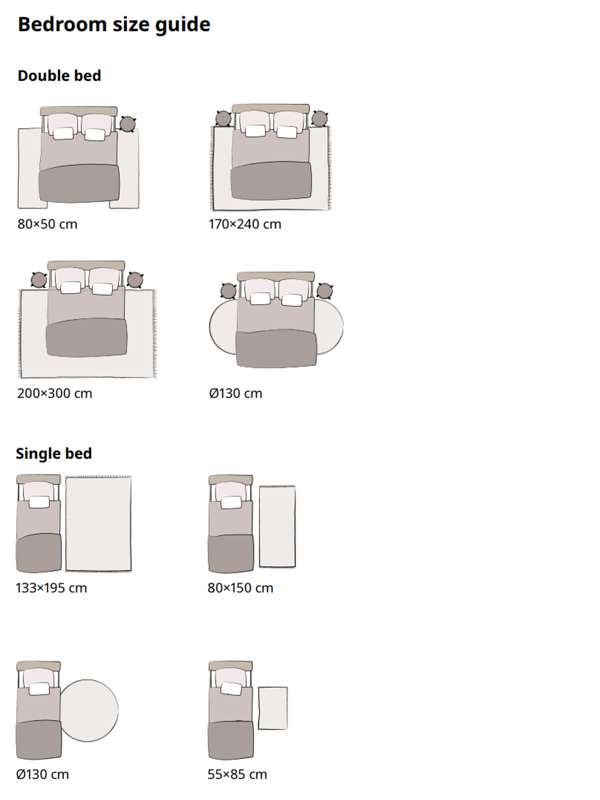
A rug under the bed should be large enough to extend beyond the bed edges. This makes the room look balanced and cozy.
Common sizes are 8x10 feet or 9x12 feet for queen and king beds. The rug should go at least 18 inches past the bed sides.
- Place the rug so it starts under the bed's front legs.
- Leave about 18-24 inches around the sides and foot of the bed.
- Ensure enough floor space shows around the rug edges.
Rugs For Small Bedrooms
Small bedrooms need smaller rugs to avoid crowding the space. A rug that fits well keeps the room open and neat.
Try rugs that are 5x8 feet or 6x9 feet. These sizes fit well under twin or full beds and leave some floor visible.
- Choose a rug that goes under the bed but does not cover the whole room.
- Leave some floor visible for a spacious feel.
- Consider round or oval rugs to soften corners.
Layering Rugs In Bedrooms
Layering rugs adds texture and style. Use a large base rug with a smaller rug on top to create interest.
Pick rugs with different patterns or materials. Layering also helps define areas like seating or reading corners.
- Start with a large neutral rug as the base.
- Add a smaller patterned or colorful rug on top.
- Make sure the smaller rug fits well inside the larger rug edges.
Credit: www.ikea.com
Rugs In Entryways And Hallways
Entryways and hallways are high-traffic areas in any home. Choosing the right rug size helps protect floors and adds style.
Area rugs in these spaces should fit well to avoid tripping and to enhance the look of the room.
Runner Rug Length Guidelines
Runners should be long enough to cover most of the hallway length. Leave some space at each end to avoid overcrowding.
A good rule is to keep 6 to 12 inches of floor visible at both ends of the runner.
- Measure the hallway length first
- Subtract 12 to 24 inches total for gaps at both ends
- Choose a runner close to this adjusted length
Width Considerations For Hallways
The rug width should leave enough room on each side for walking. Avoid rugs that are too wide or too narrow.
Most hallway rugs range from 2 to 3 feet wide. This fits well in standard hallways.
- Measure the hallway width
- Leave about 6 inches of floor visible on each side
- Pick a rug width that fits within these limits
Durability And Material Choices
Entryways and hallways get heavy foot traffic. Choose rugs made from strong materials that last.
Look for rugs that resist dirt and are easy to clean. Synthetic fibers and low-pile wool are good options.
- Synthetic fibers like nylon and polypropylene resist stains
- Low-pile wool is durable and hides dirt well
- Avoid delicate materials that wear quickly
- Consider rugs with non-slip backings for safety
Measuring Your Space Accurately
Choosing the right size area rug starts with measuring your space well. Accurate measurements help you pick a rug that fits perfectly.
Measuring your room carefully avoids buying a rug that is too big or too small. This guide shows how to measure for the best fit.
Tools Needed For Measurement
To measure your space, you need a few simple tools. These help you get exact dimensions quickly and easily.
- Tape measure or laser distance measurer
- Notebook and pen to write down numbers
- Masking tape or painter’s tape to mark edges
- Furniture layout or room blueprint (optional)
Common Measurement Mistakes
Many people make errors that lead to wrong rug sizes. Avoid these common mistakes for better results.
- Measuring only the floor area without furniture
- Not including extra space around furniture legs
- Using wrong units or mixing feet and inches
- Ignoring room shape and obstacles like doors
Visualizing Rug Size In A Room
Seeing how a rug will look helps avoid size surprises. Use simple steps to imagine your rug in the space.
- Place painter’s tape on the floor to outline rug edges
- Use cardboard or paper cutouts matching rug size
- Take photos and walk around to check proportions
- Consider rug placement relative to furniture and walls
Styling Tips For Rug Placement
Choosing the right size for your area rug can change how your room looks. It can make your space feel cozy or open. Placing the rug well helps to tie the room together.
Here are some tips to help you style your rug and place it perfectly in your room.
Balancing Rug And Floor Space
Make sure your rug is not too big or too small for the floor. A rug that is too large covers too much floor and can make the room look smaller. A rug that is too small may look lost in the space.
Leave some floor visible around the rug to balance the room. This space shows off your floors and frames the rug nicely.
- Leave 12 to 18 inches of floor visible around the rug
- In large rooms, rugs can be bigger but should not cover all the floor
- In small rooms, use smaller rugs to keep the space open
Mixing Patterns And Textures
Using different patterns and textures can make your room feel lively. A rug can be plain or patterned. It works well with other textures in your furniture or curtains.
Try to mix soft and rough textures. Patterns that are different but share colors help the room feel connected.
- Pair a patterned rug with solid furniture
- Use a textured rug with smooth surfaces
- Choose colors that repeat in room decor
Adjusting Rug Size For Room Shape
Room shape affects the best rug size. Square rooms fit square or round rugs. Long rooms look good with runners or long rectangular rugs.
Match the rug shape with the room shape to create harmony. This helps the room feel balanced and neat.
- Use a square rug in square rooms
- Try a round rug in small, cozy spaces
- Place a runner in hallways or narrow rooms

Credit: www.slumberland.com
Frequently Asked Questions
What Size Area Rug Is Best For A Living Room?
The ideal size for a living room area rug is 8x10 or 9x12 feet. This size allows the front legs of furniture to rest on the rug. It helps define the space and creates a cohesive look. Always measure your space before purchasing.
How Big Should An Area Rug Be Under A Dining Table?
Choose a rug that extends at least 24 inches beyond the dining table edges. This ensures chairs remain on the rug when pulled out. A typical size for this setup is 8x10 feet. It provides a balanced appearance and protects the flooring.
Can An Area Rug Be Too Big?
Yes, an oversized rug can overwhelm a room and make it appear smaller. Ensure at least 12-18 inches of floor are visible around the rug's perimeter. This maintains balance and defines the space effectively. Always measure your room before choosing a rug size.
Should All Furniture Sit On An Area Rug?
Not necessarily, but placing at least the front legs of furniture on the rug is recommended. This approach helps anchor the room and offers a unified look. It also prevents the rug from appearing like an afterthought. Measure carefully to achieve this setup.
Conclusion
Choosing the right area rug size shapes your room’s look and feel. A rug too small may seem lost. Too big can crowd the space. Think about your furniture and room size first. Leave some floor visible around the rug edges.
This balance makes the room feel open and cozy. Rugs tie the room together and add comfort. Pick a size that fits well and suits your style. A well-sized rug makes any space warm and inviting. Simple choices create a big impact.