

Are your dining chairs looking worn out or outdated? You don’t have to buy new ones to refresh your space.
Reupholstering your dining chair seat is a simple, cost-effective way to give your chairs a fresh, stylish look. In this guide, you’ll learn easy steps to transform your seats, even if you’ve never done it before. By the end, you’ll have the confidence to tackle this project yourself and enjoy chairs that feel brand new.
Ready to upgrade your dining area without breaking the bank? Let’s get started!
Credit: www.youtube.com
Tools And Materials Needed
Reupholstering a dining chair seat requires some basic tools and materials. These help you remove old fabric and attach new fabric smoothly.
Gathering everything before you start saves time and makes the job easier.
Fabric
Choose a durable fabric that matches your style and chair use. Upholstery fabric is best because it lasts longer.
Pick enough fabric to cover the seat with some extra for stapling underneath.
Staple Gun And Staples
A staple gun attaches the fabric tightly to the seat base. Use staples that are the right size for your chair.
- Manual or electric staple gun works well
- Choose staples about 1/4 inch long
- Have extra staples ready
Screwdriver
You need a screwdriver to remove the seat from the chair frame. Most chairs use screws under the seat.
Check if you need a flathead or a Phillips screwdriver before starting.
Pliers
Pliers help pull out old staples or tacks from the seat. They make removing the old fabric easier and cleaner.
Scissors
Sharp scissors are needed to cut the new fabric to the right size and shape. Cut carefully for a neat fit.
Foam Padding Or Batting
Foam padding adds comfort to the seat. Batting can smooth out the foam edges for a better finish.
- Choose foam thickness based on comfort needs
- Batting wraps around foam for smoothness
- Buy enough to cover the seat fully
Measuring Tape
Use a measuring tape to measure the seat size before cutting fabric and foam. Accurate measurements avoid waste.
Chalk Or Fabric Marker
Mark fabric edges and cutting lines with chalk or a fabric marker. These marks guide you for precise cuts.

Credit: thehappyhousewife.com
Removing The Old Seat Cover
Removing the old seat cover is the first step in reupholstering a dining chair seat. It helps you prepare the chair for the new fabric and padding.
Take your time to avoid damaging the chair or the seat base. Gather the right tools before you start.
Gather Necessary Tools
You need some basic tools to remove the old seat cover. These will make the process easier and safer.
- Screwdriver (flathead or Phillips)
- Pliers
- Staple remover or flat tool
- Scissors
- Work gloves (optional)
Remove The Seat From The Chair Frame
Turn the chair upside down to access the seat. Most seats are held by screws or bolts.
Use the screwdriver to remove these screws carefully. Keep them safe for later use.
Take Out Old Staples Or Nails
Look under the seat to find staples or nails holding the fabric. Use pliers or a staple remover to pull them out.
Work slowly to avoid tearing the wood or padding underneath. Removing all staples is important for a smooth reupholstery.
Peel Off The Old Fabric And Padding
After removing staples, gently pull the fabric off the seat. Check if the padding is still good to reuse.
If the padding is worn out, remove it completely to replace with new material later.
Preparing The Seat Cushion
Before you start reupholstering, prepare the seat cushion carefully. This step helps you get a smooth and comfortable finish.
Check the current condition of the cushion and decide if you need new padding or foam.
Checking The Padding
Remove the old fabric to see the padding underneath. Look for any damage or wear in the padding material.
Feel the cushion to check if it is still soft and supportive. Flat or hard spots mean the padding needs to be replaced or added.
Replacing Or Adding Foam
If the foam is thin or broken, replace it with new foam. Choose foam with the right thickness for comfort and support.
You can also add a layer of batting over the foam. Batting gives extra softness and a smooth look under the fabric.
- Cut foam to fit the seat base exactly
- Use spray adhesive to attach foam if needed
- Cover foam with batting for a soft finish
- Staple batting securely around the edges
Choosing The Right Fabric
Picking the right fabric is key to a good dining chair seat. It affects comfort, style, and how long the seat lasts.
Think about how often you use the chair and what kind of look you want. This helps you choose the best fabric for your needs.
Fabric Types
Different fabrics offer different benefits. Some are soft and cozy, while others are strong and easy to clean.
- Cotton:Soft and breathable but can stain easily.
- Polyester:Durable and resists wrinkles and stains.
- Linen:Natural look and cool feel but wrinkles fast.
- Leather:Easy to clean and lasts long but can be expensive.
- Velvet:Luxurious and soft but harder to clean.
- Canvas:Strong and good for heavy use.
Color And Pattern Tips
Choose colors and patterns that fit your room style and hide dirt well. Dark colors hide stains better than light ones.
Patterns can add interest but keep them simple if your room is busy. Small patterns hide wear better than large ones.
- Use neutral colors for a classic look.
- Bright colors add a fun touch to plain rooms.
- Stripes and small prints hide dirt well.
- Avoid very light colors if you have kids or pets.
- Match patterns with your existing furniture style.
Cutting And Securing The Fabric
Reupholstering a dining chair seat needs careful work with fabric. Cutting the fabric right and securing it well keep the seat neat and durable.
This part of the process makes sure the fabric fits perfectly and stays in place for a long time.
Measuring And Cutting
First, measure the seat to know how much fabric you need. Add extra fabric around all sides to wrap under the seat.
Use sharp scissors to cut the fabric. Cut slowly to keep straight edges and avoid fraying.
- Measure seat width and length
- Add 3 to 4 inches on each side
- Mark the fabric with chalk or a pencil
- Cut carefully along the marks
Stapling Techniques
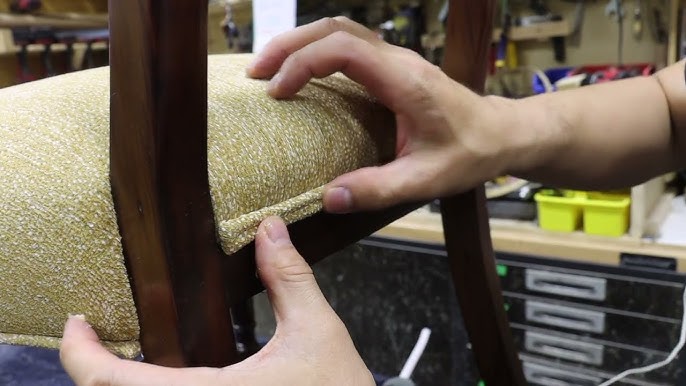
Place the fabric over the seat, making sure it is smooth. Start stapling in the center of one side, then pull the fabric tight and staple the opposite side.
Work your way out towards the corners, pulling fabric tight and adding staples every few inches. Fold the corners neatly before stapling.
- Begin stapling at the center of one side
- Pull fabric tight before stapling the opposite side
- Add staples every 2-3 inches
- Fold corners cleanly and staple securely
- Check fabric is smooth and tight
Reattaching The Seat
Reattaching the seat is the final step in reupholstering your dining chair. It secures the newly covered seat back to the chair frame.
Make sure the seat fits well and the screws or bolts are tight. This keeps the seat safe and stable.
Align The Seat With The Chair Frame
Place the seat on the chair frame carefully. Check if all the holes line up with the screw holes on the frame.
Proper alignment helps you avoid damaging the wood or breaking screws later.
Use The Right Screws Or Bolts
Use screws or bolts that fit the chair frame holes. Old screws usually work well unless they are damaged.
- Check if screws are straight and not rusty
- Replace any worn or stripped screws
- Use a screwdriver or drill to fit screws tightly
Secure The Seat Firmly
Tighten the screws evenly to hold the seat in place. Avoid over-tightening to prevent cracking the frame.
Test the seat by pressing it gently to check for movement. If it feels loose, tighten the screws a bit more.
Check For Stability And Comfort
Sit on the chair to test the seat's stability. The seat should not wobble or shift under weight.
Make sure the seat feels comfortable and the fabric is smooth without wrinkles.
Tips For A Professional Finish
Reupholstering a dining chair seat can refresh your furniture. A neat job looks great and lasts longer.
Use simple tricks to get smooth fabric and clean edges. These tips help your work look professional.
Smoothing Wrinkles
Wrinkles make the seat look messy. Pull the fabric tight but not too tight to avoid tears.
Start stapling from the center of each side. Work your way out to the corners to keep fabric smooth.
- Pull fabric evenly on all sides
- Staple every few inches for hold
- Check wrinkles before adding more staples
- Use your hand to press fabric flat as you work
Trimming Excess Fabric
Trim excess fabric after stapling. Leaving too much can look bulky under the seat.
Cut close to the staples but avoid cutting staples or the seat base. Use sharp scissors for clean cuts.
- Leave about half an inch of fabric beyond staples
- Cut small sections at a time
- Check that fabric stays tight after trimming
- Dispose of scraps to keep your work area clean
Credit: dengarden.com
Frequently Asked Questions
What Tools Are Needed For Reupholstering?
To reupholster a dining chair seat, you'll need a staple gun, upholstery fabric, scissors, and a screwdriver. Additionally, having a pair of pliers, a measuring tape, and a foam cushion can be helpful. Make sure to gather these tools before starting your project for a smoother process.
How Do I Choose Fabric For Upholstery?
Choose a durable, stain-resistant fabric for dining chairs. Consider patterns or colors that complement your dining room decor. Measure the seat dimensions to ensure you purchase enough fabric. Opt for fabrics specifically designed for upholstery to ensure longevity and ease of cleaning.
Can I Reupholster Without Removing Old Fabric?
Yes, you can reupholster over existing fabric if it's in good condition. Ensure the old fabric is clean and smooth. Adding a layer of batting over the old fabric can provide extra cushioning. However, removing old fabric can offer a cleaner finish and better adherence.
How Long Does It Take To Reupholster A Chair?
Reupholstering a dining chair seat typically takes about 1 to 2 hours per chair. This time can vary based on your experience and the chair's design. Preparing materials beforehand can speed up the process. Taking your time ensures a neat and professional-looking result.
Conclusion
Reupholstering a dining chair seat can refresh your furniture easily. Choose fabric you like and prepare your tools first. Remove old fabric carefully to avoid damage. Cut new fabric to fit the seat well. Attach fabric tightly for a neat finish.
Take your time and enjoy the process. Your chair will look new and feel comfortable. This simple project saves money and adds style. Try it yourself and see the difference. A small effort brings big results.


